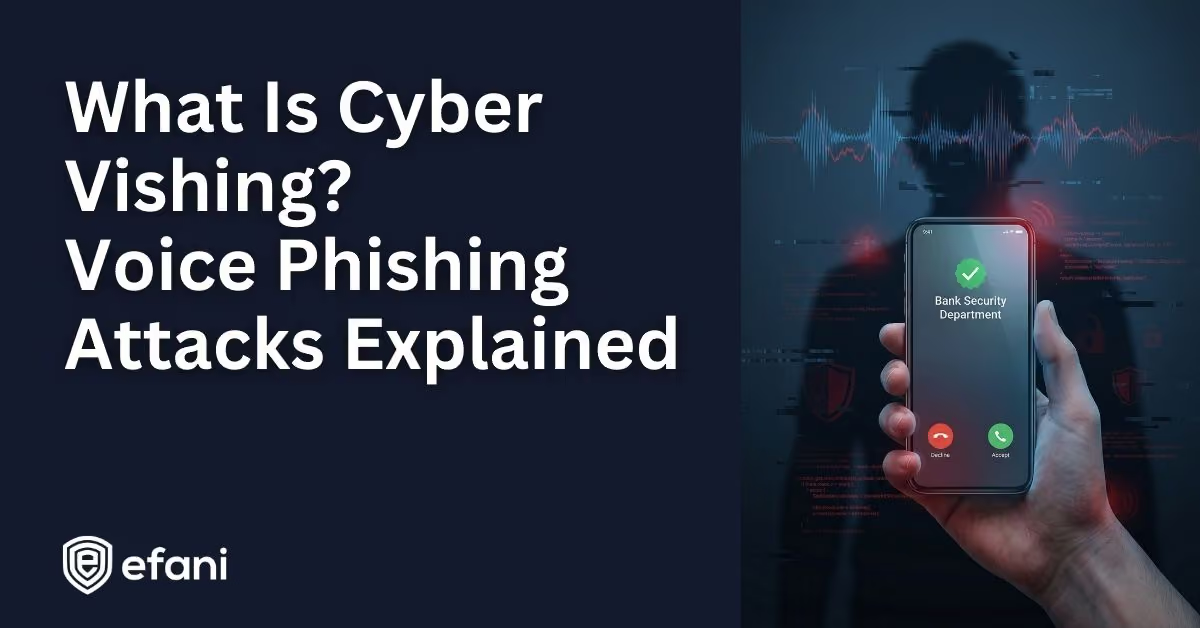
What Is Cyber Vishing? Voice Phishing Attacks Explained


Introduction
If you have ever gotten a call that starts with, “Hi, this is your bank,” you already know the vibe. The person sounds confident, the caller ID looks legit, and they have just enough personal details to feel real. Then they hit you with urgency: suspicious charge, frozen account, compromised password, “we just sent you a code,” and you need to act right now.
That is the heart of cyber vishing.
Vishing is one of those scams that feels old school because it happens over the phone, but it is absolutely a modern cyber attack. It is powered by data breaches, caller ID spoofing, cheap internet phone systems, and increasingly, AI tools that help scammers sound more believable.
Is your cellphone vulnerable to SIM Swap? Get a FREE scan now!
Please ensure your number is in the correct format.
Valid for US numbers only!
What Is Cyber Vishing?
Vishing is short for voice phishing. It is a type of social engineering attack where a scammer uses phone calls or voice messages to trick you into handing over something valuable, such as passwords, verification codes, banking details, personal information, or money.
When people say cyber vishing, they are highlighting that this is not just a random phone scam. It is usually part of a broader cybercrime chain that leads to account takeovers, identity theft, SIM swaps, or financial fraud.
The phone call is the human layer of the attack. It is how attackers bypass technical defenses by exploiting trust.
Why Vishing Works So Well
Most people are trained to spot sketchy emails, but phone calls hit differently.
- There is real time pressure. Scammers create urgency because urgency shuts down careful thinking. When you feel like something bad is about to happen, you are more likely to act without verifying.
- There is authority. Attackers pretend to be banks, carriers, government agencies, IT teams, or executives because people instinctively cooperate with authority figures.
- It feels personal. A real voice can build trust much faster than text. Even a short conversation can feel convincing.
- Caller ID is easy to fake. Attackers can make it look like a call is coming from a real company number, sometimes even the exact number printed on your card.
They often already know something about you. Data from breaches, public records, or social media gives them just enough context to sound legitimate.
The Technical Infrastructure Behind Cyber Vishing
Even though vishing feels like “just a phone call,” it is usually backed by real infrastructure and automation. Modern vishing campaigns look a lot like SaaS operations, just criminal ones.
VoIP And SIP Calling Systems
Most vishing calls do not come from traditional phone lines. Attackers use VoIP platforms and SIP trunks that let them place thousands of calls cheaply and programmatically.
This gives them:
- Massive call volume at low cost
- Easy number rotation to avoid blocking
- Geographic spoofing to appear local
- Automated dialing tied to scripts and prompts
Some campaigns even mix robocalls with live agents. The robocall qualifies the victim first, then hands the call to a human once someone engages.
Caller ID Spoofing At The Network Level
Caller ID is not a secure signal. In many regions, the originating number is passed as metadata that can be manipulated.
Attackers exploit this to:
- Clone real bank or carrier numbers
- Match area codes to the victim’s location
- Rotate trusted-looking numbers dynamically
Even with newer protections like call authentication frameworks, spoofed calls still get through, especially for cross-border traffic or VoIP-originated calls.
Breach Data As Fuel For Vishing
Vishing rarely happens in isolation. It is often powered by data from previous breaches.
Attackers combine:
- Names and phone numbers
- Email addresses
- Partial addresses or ZIP codes
- Employer or industry data
This data lets them personalize the call just enough to pass a human credibility check. The more personalized the call feels, the more likely the victim is to comply.
Real-Time Credential And OTP Relay Attacks
One of the most dangerous vishing techniques is real-time relay.
Here is how it works:
- The attacker initiates a real login on a bank or email site
- The system sends a legitimate one time code to the victim
- The attacker calls and asks for that exact code
- The victim reads it aloud
- The attacker completes the login instantly
Nothing is “fake” in this flow except the person asking for the code. From the system’s point of view, everything looks normal.
SIM Swap Enablement Through Vishing
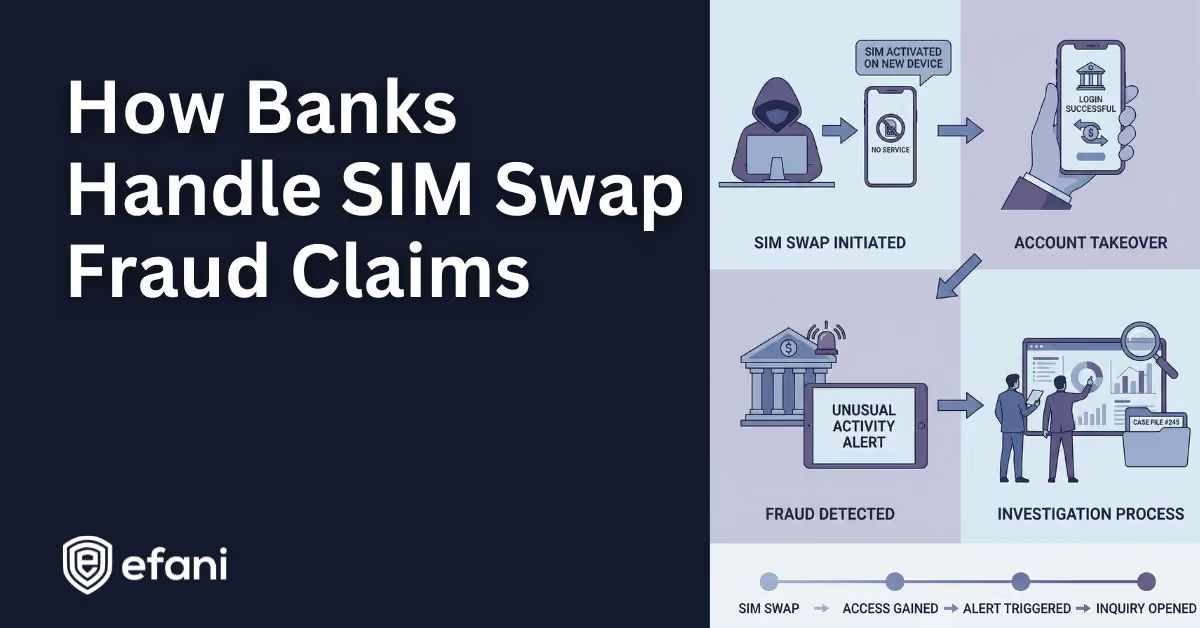
Vishing is frequently used as a precursor to SIM swap attacks.
Attackers call either:
- The victim directly to extract carrier details
- The mobile carrier to impersonate the victim
Once they have enough information, they can trigger a SIM swap or port-out, gaining control of the phone number.
That unlocks:
- SMS based MFA interception
- Password resets across email and financial accounts
- Silent account recovery loops
This is why phone number security has become such a critical weak point.
AI Voice And Script Assistance
While full real-time voice cloning is still emerging, AI already plays a role in vishing.
Attackers use AI to:
- Generate adaptive call scripts
- Improve tone, pacing, and persuasion
- Customize scenarios by industry or role
- Scale training for call agents
Some campaigns also use AI-generated voicemail drops that sound natural enough to prompt callbacks.
SIM Swap Protection
Get our SAFE plan for guaranteed SIM swap protection.
How Vishing Fits Into Larger Cyber Attacks
Vishing is rarely the final step. It is usually a bridge between systems.
Common chains look like:
- Vishing → email account takeover → financial fraud
- Vishing → SIM swap → multi-account compromise
- Vishing → remote access install → ransomware or theft
- Vishing → payroll or vendor payment fraud
In enterprise environments, vishing often overlaps with business email compromise and executive impersonation, especially when attackers already have access to internal context.
Monthly
Yearly
How A Typical Vishing Attack Works
Most vishing attacks follow a familiar pattern.
It starts with a hook. The caller claims there is a problem: fraud, a compromised account, a delivery issue, a payroll change, or a security incident.
Next comes the trust builder. They confirm details about you, such as your name or address, to make the call feel authentic.
Then comes the action step. They ask you to do something that helps them, like reading out a one time code, approving a login, installing software, or sending money.
After that, they lock you in. They keep you on the line and apply pressure so you do not pause or verify. Threats and warnings escalate if you hesitate.
Finally, they act fast. Once they get what they need, they immediately move to take over accounts, move money, or prepare follow-up attacks.
Common Cyber Vishing Scenarios
Vishing scripts change, but the goals stay the same. Here are some common examples.
1. Bank Fraud Calls
The caller claims suspicious charges were detected and they need to verify your account. In reality, they want your login credentials or verification codes so they can take control.
A common trick is asking you to read a code they “just sent,” which is actually a real login code they triggered.
2. Tech Support Calls
Attackers pretend to be from Apple, Google, Microsoft, or your company’s IT team. They claim your device is compromised.
Their real goal is remote access, malware installation, or watching you log into sensitive accounts.
3. Government Or Law Enforcement Threats
These calls rely on fear. The scammer threatens arrest, fines, or legal action unless you pay immediately.
They are after money or identity details, often pushing unusual payment methods.
4. Account Recovery Or Password Reset Calls
These happen when an attacker is already trying to break into an account. They call to trick you into completing the process for them.
They want the code, the push approval, or the answers to security questions.
5. Mobile Carrier And SIM Related Calls
These target your phone number directly. The caller claims to be from your carrier’s security team.
Their goal is to collect enough information to perform a SIM swap or port-out so they can intercept calls and texts.
Red Flags That Signal Vishing
You do not need to recognize every scam. You just need to spot the warning signs.
Urgency and threats are a big one. Legitimate companies do not rush you with fear.
Requests for one time codes are another. No real support agent needs you to read those out loud.
Requests for passwords, full PINs, or unusual payments are also major red flags.
Pressure to stay on the phone, instructions not to call back, or requests to install software should immediately raise suspicion.
If the call would give someone the ability to log in, move money, or control your accounts, assume it is a scam until you independently verify it.
How To Protect Yourself From Cyber Vishing
You do not need advanced tools. You need a consistent response.
1. Take Control Of The Call
Slow things down. Say you will hang up and call back using an official number. Real companies will respect this. Scammers will resist.
2. Verify Through Channels You Initiate
Do not trust inbound calls. Use the official app, website, or a known number to confirm what is happening.
3. Never Share One Time Codes
This cannot be overstated. If you did not request it, do not share it. Codes are keys.
4. Reduce Dependence On SMS Security
Use authentication apps, passkeys, or hardware keys where possible. SMS is convenient but vulnerable.
Bonus: Lock Down Your Phone Number
Your phone number is often the recovery key for your digital life. Protect it with strong carrier PINs, port-out protections, and limited public exposure.
At Efani, we focus on securing the phone number itself because once an attacker controls your number, they can intercept calls, texts, and account recovery flows across multiple services. Vishing is often the first step attackers use to get there.
Spam filters reduce noise but do not stop targeted attacks. Always stay alert.
What To Do If You Think You Fell For A Vishing Scam
Act fast and focus on containment.
If you shared a password or code, change it immediately and strengthen authentication. Check for account changes and unusual activity.
If you sent money, contact your bank or payment provider right away and document everything.
If your phone number may be compromised, contact your carrier through official channels and add additional protections.
Reporting the incident can also help track patterns and prevent others from being targeted.
A Better Way To Think About Phone Calls
Treat phone calls the same way you treat emails.
A convincing voice is not proof. Caller ID is not proof. Urgency is not proof.
Proof comes from verification through a channel you trust and initiate yourself.
Conclusion
Cyber vishing is voice phishing, and it is one of the most effective tools attackers use today because it targets human instincts instead of software.
If you remember a few rules, remember these:
- Do not share one time codes
- Hang up and call back using official numbers
- Question urgency and pressure
- Protect your phone number like a master key