AT&T VS Xfinity Mobile


Introduction
When choosing a mobile service provider, it’s important to consider your specific needs and budget to find the right fit. AT&T and Xfinity Mobile are two leading players in the U.S. market, each offering distinct advantages. AT&T is a traditional carrier known for its wide coverage, reliable service, and comprehensive plan options, including postpaid and prepaid choices. Xfinity Mobile, on the other hand, is a mobile virtual network operator (MVNO) that operates on Verizon’s network and offers competitive pricing, particularly for Xfinity Internet customers. Its combination of Wi-Fi and cellular data helps keep costs low while maintaining good service.
This article will help you understand the differences between AT&T and Xfinity Mobile to decide which carrier is the best fit for you.
Quick Verdict: AT&T is the stronger pick for nationwide network reliability, international roaming, and bundled services. Xfinity Mobile is best for existing Xfinity Internet customers who want affordable, bundled mobile service on Verizon's network. Neither offers dedicated SIM-swap insurance the way a security-first provider like Efani does.
Is your cellphone vulnerable to SIM Swap? Get a FREE scan now!
Please ensure your number is in the correct format.
Valid for US numbers only!
AT&T vs. Xfinity Mobile: Quick Intro
AT&T
AT&T is one of the largest mobile carriers in the U.S., offering nationwide coverage through its robust 4G LTE and growing 5G networks. AT&T provides a variety of plans, including unlimited data plans and flexible prepaid options, catering to different types of users. With a strong focus on network reliability and customer service, AT&T is a popular choice for those seeking dependable coverage in urban and rural areas. AT&T offers numerous perks, such as device financing, bundled services with its internet and TV offerings, and access to over 30,000 Wi-Fi hotspots.
Xfinity Mobile
Xfinity Mobile operates as an MVNO using Verizon's extensive network, which is known for its robust coverage across the U.S., especially in rural areas. Xfinity Mobile also utilizes Comcast's vast network of Wi-Fi hotspots to offload data and reduce costs. As of early 2026, Comcast discontinued the "By the Gig" pay-per-use option for new customers and now offers two unlimited tiers: Unlimited ($40/mo) and Premium Unlimited ($50/mo, with 100GB high-speed data and 4K streaming). Xfinity Mobile’s service especially appeals to existing Xfinity Internet customers, who receive discounts on mobile services and can manage their internet and mobile plans under one account.
AT&T vs. Xfinity Mobile Comparison
Below is a comparison table summarizing the key differences between AT&T and Xfinity Mobile:
Coverage and Network Performance
AT&T is known for its expansive network, providing nationwide coverage with strong performance in both urban and rural areas. AT&T offers 4G LTE and 5G access, ensuring reliable data speeds in most parts of the country. With its robust infrastructure, AT&T is a solid choice for users looking for consistent service, even in less populated areas. AT&T also includes access to thousands of Wi-Fi hotspots, providing an extra layer of connectivity in public places.
Xfinity Mobile, on the other hand, relies on Verizon’s network, which is similarly known for wide coverage, particularly in rural areas. Xfinity Mobile also taps into Comcast’s vast network of Wi-Fi hotspots to keep customers connected, helping reduce data usage and costs. While Xfinity Mobile’s reliance on Verizon ensures strong network performance, speeds on unlimited plans may slow during times of network congestion.
Plan Options and Pricing
AT&T relaunched its lineup in March 2026 as Value 2.0 ($50/mo), Extra 2.0 ($70/mo), Premium 2.0 ($90/mo), and Elite 2.0 ($110/mo, added in April), all including AT&T ActiveArmor security and premium data, mobile hotspot allowances, and bundled service options. AT&T’s prepaid plans offer more flexibility, with options to pay month-to-month and avoid long-term commitments.
Xfinity Mobile now offers two unlimited tiers, Unlimited ($40/mo) and Premium Unlimited ($50/mo), after phasing out its pay-per-gig option for new customers in early 2026. Both plans offer a fixed monthly rate, with data deprioritized during network congestion after 30GB (Unlimited) or 100GB (Premium Unlimited) rather than hard-throttled. Xfinity Mobile’s pricing is particularly appealing to Xfinity Internet customers, who benefit from discounted rates and can bundle their services for added savings.
Data Speeds and Throttling
AT&T provides reliable data speeds, with 5G access included in most of its plans. However, on some of the unlimited plans, data speeds may be throttled after a certain amount of high-speed data is used, particularly during times of heavy network traffic. AT&T offers mobile hotspot data on most of its unlimited plans, giving users flexibility when they need to connect other devices.
Xfinity Mobile offers high-speed data through Verizon's network, with access to 5G where available. Both current tiers may experience deprioritization during periods of heavy network congestion, past their respective 30GB or 100GB thresholds. Xfinity Mobile’s hotspot feature is included with unlimited plans, but hotspot speeds are capped at 600kbps, which can limit usability for high-bandwidth activities.
Customer Service and Extras
AT&T offers comprehensive customer support, with options for in-store, phone, and online assistance. The company also provides perks such as device financing, which allows users to purchase new devices with monthly payments, and bundling options that combine mobile, internet, and TV services. AT&T’s partnerships and offers, like access to HBO Max, provide added value to its premium plans.
Xfinity Mobile’s customer service is available through phone, app, and in Xfinity stores, making it accessible for most users. One of Xfinity Mobile’s standout features is its ability to leverage Comcast’s millions of Wi-Fi hotspots, providing users with easy access to data-saving connectivity. Xfinity Mobile also offers device financing, allowing customers to spread out payments for new phones over time.
International Roaming
AT&T offers a variety of international roaming options, including day passes for international travel and plans with unlimited talk, text, and data in Canada and Mexico. AT&T’s international options are comprehensive, making it a good choice for frequent travelers who need reliable service abroad.
Xfinity Mobile provides international roaming, but its focus is on using Wi-Fi where available to reduce costs. Xfinity Mobile customers can use their phones in several countries, but international options are not as extensive as AT&T’s. Users can still text and call from abroad, but data usage may rely more on finding available Wi-Fi connections.
User Base in the U.S.
AT&T has a significant customer base, with more than 74 million postpaid phone subscribers as of Q2 2026, making it one of the largest carriers in the U.S. Xfinity Mobile, while newer to the mobile market, has grown quickly due to its competitive pricing and integration with Xfinity Internet, reaching around 3 million users.
Security Comparison
Network Security:
Both AT&T and Xfinity Mobile use strong security measures to protect customer data. AT&T’s network security is backed by its extensive infrastructure, while Xfinity Mobile benefits from Verizon’s robust security protocols.
Account Protection:
AT&T offers secure account management through its app and website, with additional features like two-factor authentication (2FA), though it's worth understanding what privacy-focused carrier features do and don't actually protect against. Xfinity Mobile also provides secure account management through its online platform, with the added benefit of being integrated with Comcast’s broader security framework.
Data Encryption:
Both carriers employ advanced encryption techniques to protect customer data, ensuring secure communication and data handling in line with industry standards.
Customer Privacy Policy:
AT&T and Xfinity Mobile both maintain transparent privacy policies that outline how customer data is used. Each company allows users to control their privacy settings and offers guidelines on how data is shared and protected.
SIM Swap Protection
Get our SAFE plan for guaranteed SIM swap protection.
Plan and Packages
AT&T

Xfinity Mobile
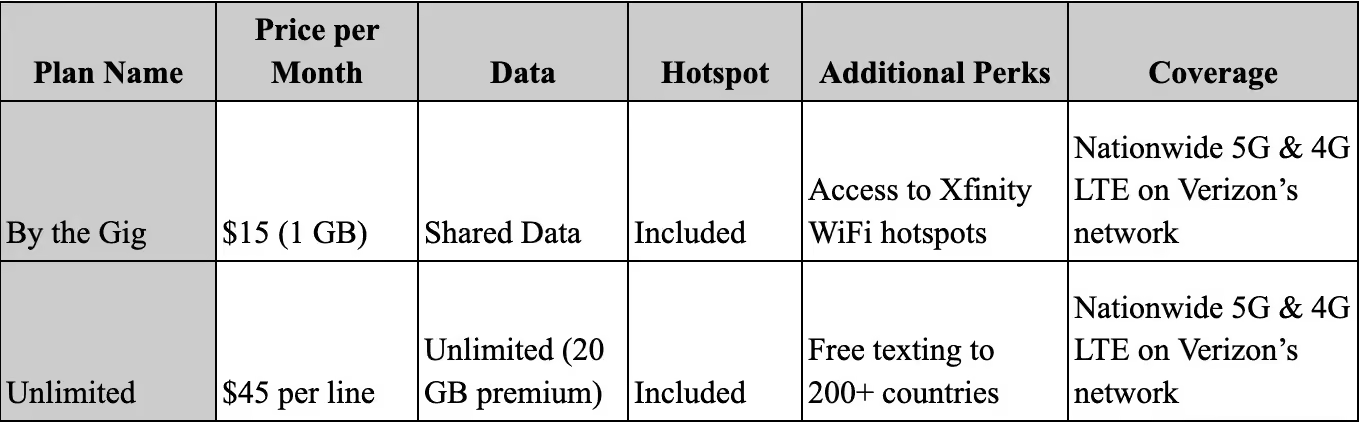
Note: Prices and features are accurate as of August 2026. Availability and specific offerings may vary.
Monthly
Yearly
Conclusion
AT&T and Xfinity Mobile cater to different types of users, each with its own strengths, if neither is quite right, see our guide to AT&T alternatives. AT&T is a great option for those who prioritize extensive coverage, a wide variety of plan choices, and strong international roaming options. It’s ideal for users looking for reliable service and comprehensive customer support. Xfinity Mobile, on the other hand, is perfect for Xfinity Internet customers who want affordable mobile service and the flexibility of pay-per-gig or unlimited plans with access to Verizon’s network and millions of Wi-Fi hotspots. Both providers offer reliable service, making the choice largely dependent on your specific needs and existing services.
Is data security your primary concern when choosing a mobile provider? Consider alternatives like Efani, a secure cell phone carrier that focuses on providing secure mobile services for added peace of mind.
FAQ's
Which is better, AT&T or Xfinity Mobile?
AT&T is better for users who want a large, reliable nationwide network with its own infrastructure. Xfinity Mobile is better for existing Xfinity Internet customers who want affordable, bundled mobile service.
Is AT&T more secure than Xfinity Mobile?
Both offer standard account protections, AT&T's ActiveArmor and Xfinity's integration with Comcast's account security, but neither provides dedicated SIM-swap insurance. Security-focused providers like Efani are built specifically around that gap.
Is Xfinity Mobile cheaper than AT&T?
Generally yes, especially for existing Xfinity Internet customers who get discounted rates. Xfinity's two unlimited tiers run $40–$50/month per line, compared to AT&T's $50–$110/month range.
Does Xfinity Mobile still offer pay-per-gig plans?
No. Comcast discontinued the pay-per-gig option for new customers in early 2026, replacing it with two unlimited tiers (Unlimited and Premium Unlimited).
Which carrier has better international roaming, AT&T or Xfinity Mobile?
AT&T, by a wide margin. It offers day passes and unlimited plans covering many countries, while Xfinity Mobile's international options are more limited and rely heavily on Wi-Fi availability.