
Cryptocurrency Trends: Five Predictions For The Coming Year (2026)


Introduction
The crypto story is growing up. Prices still swing, but the market now behaves more like a serious financial system than a late night casino. Rails are stronger, rules are clearer, and real utility is finally showing through the fog.
The shift is easy to miss if you only track price charts. Beneath the noise, entire foundations are being rebuilt. Capital is flowing in through regulated channels, governments are sketching clearer rulebooks, and new layers of technology are unlocking ways to actually use these assets beyond speculation.
The market is less about chasing hype and more about designing systems that can stand next to traditional finance without flinching. But how did it all start?
Is your cellphone vulnerable to SIM Swap? Get a FREE scan now!
Please ensure your number is in the correct format.
Valid for US numbers only!
Why The Next Cycle Looks Different
The quiet shift is from hype to structure. Instead of frantic booms and busts powered by retail alone, market depth is now shaped by regulated products, cleaner rules, and steady demand from large allocators.
That change brings better liquidity, but it also ties crypto to the broader economy. Rates, jobs data, and geopolitics will move this market more than before. The winners plan around that reality with clear rules, not lucky guesses.
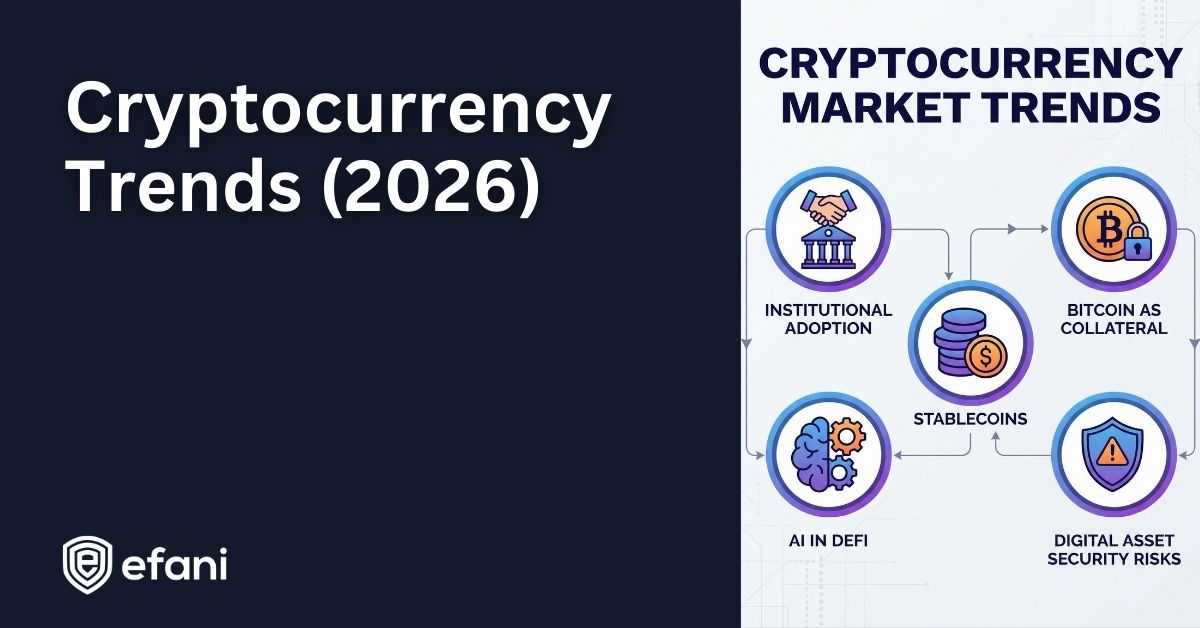
1) Institutional Capital Moves From Trial To Full Time
Patient money is the engine. Pension funds, wealth platforms, endowments, and large asset managers have moved from “let’s test” to “this is a standard line item.” Spot ETFs keep gathering assets because they simplify tax, custody, and reporting.
That steady, rules‑driven demand creates a floor under prices and improves the plumbing that sits behind the charts.
What changes for the market
- Liquidity improves across more hours. Bigger players prefer deep, reliable books. Spreads tighten, derivatives mature, and lending markets get sturdier.
- Macro matters more. When institutions own crypto, interest rate moves and global risk appetite hit prices faster.
- Model portfolios become normal. Advisors want building blocks. Expect diversified crypto baskets, not one‑coin bets.
What to do about it
- Pick your wrapper on purpose. If you favor a broker account and clean tax forms, an ETF can fit. If you want on‑chain utility, self‑custody gives you more options, but you take full responsibility.
- Set a rebalancing rule. Decide your target weights and move back to them on a schedule. That small habit copies how institutions control risk.
- Cut silent costs. Track management fees, spreads, and funding rates. Over time, basis points saved become real money.
Institutional flow attracts smarter criminals. Protect the entry point that thieves love most, your phone number. A secure cell phone service that resists SIM swaps and social engineering is not optional if you keep keys or 2FA on a handset.
Efani Secure Mobile is the most secure cell phone carrier, offering a secure phone service layer that blocks number hijacks before they start.
Tie your identity to a carrier that treats account changes like a vault event.
2) Stablecoin Regulation And Market Structure Get Clear
Clarity beats cleverness. Dollar‑backed stablecoins are getting uniform standards for reserves, disclosures, audits, and redemption.
Banks and payment networks plug into those rails with risk controls. Agencies settle who oversees what, at least for the big categories.
Once the fog lifts, more activity comes onshore, and builders can plan product roadmaps instead of legal battles.
Why this matters
- Payments get boring, which is good. With clear rules and bank connections, moving dollars becomes a normal action. Transfers stay fast, costs drop, and settlement is near‑instant.
- Treasury teams can say yes. Clean reserve rules make risk committees more comfortable with things like supplier payouts, cross‑border payroll, and on‑chain cash management.
- Fraud filters improve. Clarity attracts better compliance tools. Wallet screening, flow labeling, and blocking known bad actors all get sharper.
How to position
- Favor reputable issuers. Look for full cash or short‑term Treasury backing, frequent attestations, and simple redemption terms.
- Spread counterparty risk. Holding two approved stablecoins can be safer than one.
- Keep exit ramps ready. Maintain two off‑ramps, such as a bank‑connected exchange and a licensed fintech. If one freezes, the other moves funds.
Rules do not stop human error. Phishing still wins too often.
SIM Swap Protection
Get our SAFE plan for guaranteed SIM swap protection.
3) AI Agents Start Running Parts Of DeFi
AI has moved from buzzword to background engine.
In DeFi, narrow AI agents now do specific jobs very well. They rebalance liquidity, score credit risk, price options, and execute arbitrage faster than manual traders.
Governance sets policy. Machines handle moment‑to‑moment decisions inside guardrails.
The upside
- Better pricing, fewer dead pools. Intelligent market makers adapt to volatility in minutes, not weeks. Idle capital works harder.
- Risk reacts in real time. Lending platforms can tighten collateral or adjust rates during fast moves, not the next day.
- User paths get cleaner. Smart routers and auto‑vaults cut the click‑hunt for decent yields.
The catch
- Model mistakes cascade. If many protocols use similar models or feeds, a shared error can ripple across chains.
- Opaque logic is dangerous. If you cannot see why a system acted, you cannot judge its failure modes.
- Adversarial games sharpen. Attackers will probe models, spoof signals, and craft transactions that trick bots.
Engage without getting burned
- Prefer transparent agents. Pick protocols that publish model limits and safety valves.
- Look for kill switches and pauses. When something breaks, there should be a clear stop and a recovery plan.
- Diversify execution paths. Do not route all capital through one strategy or one oracle. Spread risk.
If an AI agent can move funds, harden the device and number that authorize it. A phone plan built for security adds human checks to SIM changes and account resets.
That is the niche Efani Secure Mobile covers.
Monthly
Yearly
4) Bitcoin Evolves Into Productive Collateral
Bitcoin is no longer just sit and hold. The base layer stays conservative, but layers on top can make BTC productive.
New networks, staking‑like security programs, and cross‑chain collateral frameworks let holders earn native rewards or secure other systems.
The goal is simple, activate idle BTC without gambling the keys.
What this unlocks
- Native BTC yield. Some networks pay BTC that helps secure them. Returns vary, risk is real, but the direction is set.
- Bitcoin‑centric DeFi. Lending, liquidity, and structured products that start with BTC itself, not only a wrapped version elsewhere.
- Cross‑ecosystem credit. Wrapped or re‑secured BTC becomes first‑class collateral in other environments, which expands credit lines and use cases.
Key risks to respect
- Bridge and contract risk. The weak link is rarely Bitcoin. It is the software that moves or locks your coins.
- Liquidity traps. Smaller layers or new protocols may show high yields because they need deposits. Exiting quickly can be hard.
- Regulatory attention. Yield on BTC draws scrutiny. Make sure your venue is properly licensed where it needs to be.
A simple checklist before chasing yield
- Audits and frequency. Who audits the contracts, and how often.
- Exit rules. How you leave if the network pauses or throttles exits.
- Bridge exposure. Worst‑case loss if a bridge fails.
- Payout currency. Rewards in BTC or a volatile token.
- Backstops. Insurance, caps, or emergency funds that actually pay.
Most yield platforms tie to a wallet that ties to a phone. Treat your mobile line as part of your cold chain. If the carrier is easy to trick, your funds are easy to steal.
5) Real‑World Asset Tokenization Becomes The On‑Ramp
Tokenizing real‑world assets moves from pilot to practice. The first big wave is intentionally boring, things like Treasury funds and short‑dated credit.
Later waves include real estate shares, private credit, and fund interests.
RWAs bring steady yield on‑chain and welcome conservative capital that never cared about collectibles or farms.
How it reshapes the stack
- DeFi rates anchor to real yields. When a protocol plugs a safe on‑chain Treasury fund into its collateral, its base rate follows the bond market. That reduces wild spikes and supports healthier leverage.
- Collateral quality improves. Stable, audited assets inside permissioned modules allow banks and fintechs to participate without rule breaks.
- Settlement speeds up. Tokenized assets can move on weekends and settle with more transparency than many legacy rails.
What to check before buying a tokenized asset
- Legal wrapper. Is it a fund share, a note, or a deposit claim. Your protection changes with the wrapper.
- Issuer and custodian. Who holds the real assets, who audits them, and how redemptions work in stress.
- Jurisdiction and status. Some products are only for accredited buyers or certain regions.
- On‑chain mechanics. Can you pledge it as collateral, split it, or transfer it without a multi‑day compliance wait.
Practical portfolio ideas
- Use a tokenized Treasury fund as your on‑chain cash bucket.
- Pair it with a core BTC position. Hold outright or via an approved wrapper.
- Add small, time‑boxed experiments. Try AI‑enabled DeFi or Bitcoin productivity plays with strict position limits and clear exit plans.
Phone And Wallet Protection
Institutions have teams. You probably do not. Borrow the basics that move the needle most.
- Use hardware keys for 2FA. SMS is convenient but weak. Add a hardware key to every exchange, broker, and email account.
- Split environments. Keep hot wallets on a daily device, cold storage offline, and recovery info in a separate place.
- Pin your carrier account. Even with a secure plan, add unique PINs and passphrases that only you know.
- Audit permissions monthly. Remove wallet approvals you no longer use. Turn on transaction simulations before signing.
Build For Boring, Win With Discipline
The real edge now is boring excellence. Clean custody. Predictable on‑chain cash management. Sensible BTC productivity that respects contract risk. AI tools with public limits, not just promises. And a mobile line that is harder to steal than your wallet.
Put those blocks in place and the next chapter feels less like a roller coaster and more like a planned road trip. Markets will still surprise you, but your system will not.
That is the point of maturity, and the most important trend of all.
FAQs
What makes this crypto cycle different from past ones?
This cycle is not only about price speculation. Institutional investors, clear regulations, and new layers of technology are reshaping the market. Crypto is acting more like a traditional financial system, with stronger rails, steadier liquidity, and more products that people and companies can actually use.
How are institutions changing the crypto market?
Big investors bring deep liquidity and long-term capital. Spot ETFs and managed products allow pension funds, endowments, and advisors to add crypto safely. That steadier demand helps reduce wild swings and ties crypto more closely to macroeconomic factors like interest rates and global events.
Why is stablecoin regulation important?
Stablecoins are the bridge between crypto and traditional finance. With clear rules on reserves and disclosures, banks and businesses can finally trust them for payments and payroll. This lowers risk, improves compliance, and makes stablecoins a reliable part of the financial system instead of a legal gray area.
What role will AI play in DeFi?
AI agents can manage liquidity, adjust lending rates, and trade faster than humans. This makes protocols more efficient and responsive. The risk is that faulty models or shared errors can spread problems quickly. Transparency, audits, and circuit breakers are key before trusting AI-driven platforms with your funds.
Can Bitcoin now earn yield like other assets?
Yes. New layers let you stake or use Bitcoin as collateral to earn native rewards. This turns idle BTC into productive capital. The risk is in the bridges and contracts that handle your coins. Before chasing yield, check audits, exit rules, and whether payouts are in BTC or volatile tokens.
What are tokenized real-world assets?
Tokenized assets are digital versions of things like Treasury funds, real estate, or credit. They bring predictable yields on-chain and attract conservative investors. They also make DeFi more stable by anchoring rates to real-world returns. The key is understanding the legal wrapper, custodian, and redemption rules before buying.


